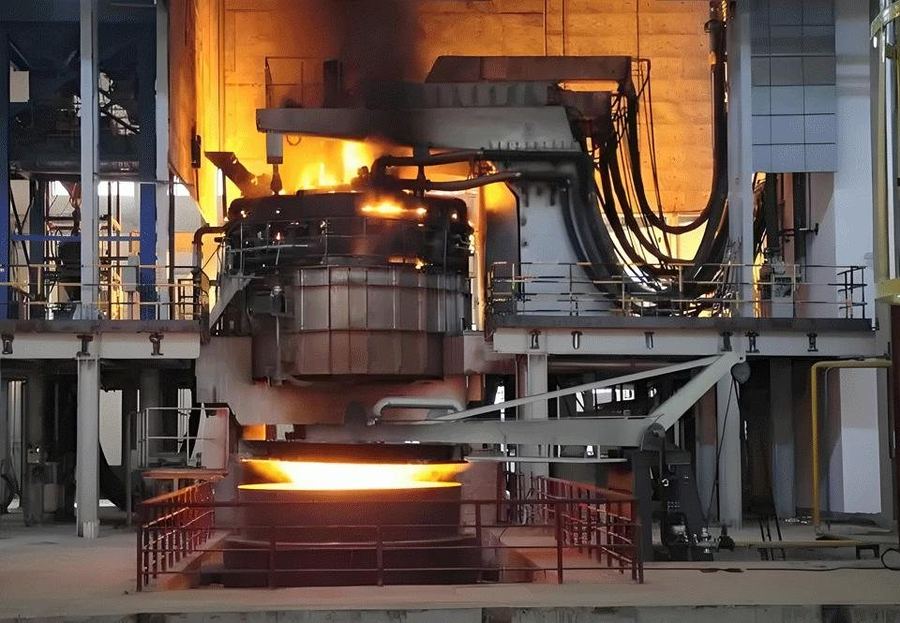
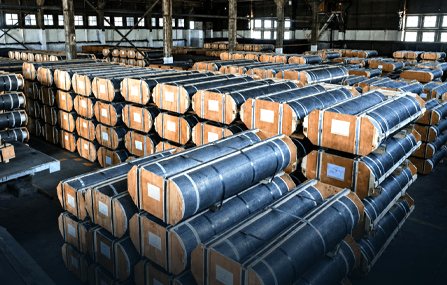
Electrode cost is not the largest item in EAF steelmaking, but it is one of the easiest to improve. Specific consumption is the sum of four components: tip and side oxidation, thermal spalling, breakage loss and stub loss. Ordered by how quickly they can be acted on:
1. Optimise the power profile
Consumption rises non-linearly with current density. Avoid extended operation above rated current in the late melting and heating phases; switch voltage/current taps to match the scrap melting state instead of running full power throughout. Log the current curve per heat and regress it against consumption to find your own high-consumption window.
2. Tighten nipples to the specified torque
A loose nipple is the leading cause of breakage and local overheating. Use dedicated tightening equipment at the specified torque, clean the socket and threads before assembly, and keep dust and scale out — they raise contact resistance. Nipples must match the electrode grade.
3. Make foamy slag work for you
Stable foamy slag submerges the arc, cuts radiation losses and side oxidation, and shortens direct exposure of the electrode to furnace gases. Poor slag stability almost always shows up as higher side oxidation.
4. Control oxygen and air ingress
Excessive oxygen lancing, long door-open periods and poor furnace sealing raise the oxygen partial pressure around the electrodes. Oxygen efficiency and furnace pressure control are frequently overlooked quick wins.
5. Charging practice and electrode movement
Prevent heavy scrap collapse from striking electrodes; keep charge mix and distribution as uniform as possible. Check electrode slipping, clamp position and column alignment regularly — eccentricity and poor clamping add mechanical stress.
6. Reduce thermal shock
Spalling and cracking depend on CTE and thermal-shock resistance, but also on operating rhythm. Use a low-CTE, high-density grade (such as UHP) and avoid frequent large power swings.
7. Cut stub loss
Standardise stub criteria and manage electrode joining and extension so unusable stub length stays short. This is often underestimated and adds up over a campaign.
8. Choose the right grade — not simply the dearest
Once consumption is split into four parts, the bottleneck becomes clear: for oxidation, focus on slag practice and anti-oxidation measures; for breakage, on nipple assembly and alignment; only for electrical and tip losses does a grade upgrade make sense.
Data to record
Per heat: steel grade, charge weight, tap-to-tap time, kWh/t, electrode consumption, breakage events, nipple torque, slag condition. Two to four weeks of consistent records is usually enough to identify the dominant loss.
For a grade and diameter review against your furnace, send us your furnace and transformer data, or see our product range and specifications.